Video Terkini

Lovely Brothers

Lovely Brothers
share your love

Wednesday, 4 April 2012

IKO UWAIS, The Next JET LEE


Iko Uwais: Our Next Action Star

Triwik Kurniasari, The Jakarta Post, Jakarta | Sun, 04/03/2011 8:00 AM
A | A | A |
JP/Triwik KurniasariJP/Triwik Kurniasari
The local film industry used to have Ratno Timoer, Dicky Zulkarnaen, Barry Prima and Advent Bangun who were familiar among moviegoers as action movie heroes. Now, movie lovers are ready to greet Iko Uwais, an action star on the rise. 

A new face on the local film scene, the 28-year-old is ready to carve his name in the action movie genre. 

Some of you may not be familiar with his name. Take a look at his filmography and you will only find a single action film titled Merantau under his belt, plus an upcoming movie, which is due to be released early next year. 

Everything happens for a reason. If Iko had never got in touch with pencak silat (traditional Indonesia martial art), he would have never have acted in action flick Merantau, directed by British filmmaker Gareth Huw Evans. 

The film, in which he plays with senior actors such as Christine Hakim, Donny Alamsyah and Alex Abbad, has brought Iko from a nobody to a somebody. 

Iko made his acting debut by starring as Yuda, a young man from rural West Sumatra who is about to leave his hometown or merantau. It is a traditional rite in which young men leave their home towns to a big city in a bid to experience new things and then return home to enrich the local community with their new skills and ideas. 

The energetic and optimistic Yuda, who masters silat harimau (tiger-inspired martial arts practiced in West Sumatra), finally learns how harsh the big city can be as he is unexpectedly drawn into a series of serious problems, which include bloody fights. 

It turns out that Iko was picked to play in Merantau due to his formidable martial art skills. 

Born in Jakarta on Feb. 12, 1983, the man whose real name is Uwais Qorny was raised in a martial art culture as his grandfather was a reputable master at the Silat Tiga Berantai school in the capital. 

Iko found his passion in pencak silat when he was in fifth grade in 1993 and was champion of the 2005 National Jamboree in Jakarta. 

His skills caught Gareth Evans’ attention during the production of the documentary Land of the Moving 
Shadows, which captures pencak silat around Sumatra and Java.

During the filming process, Iko showed impressive fighting abilities yet a natural screen performance, a good combination that could turn him into a potential action star. 

“Gareth visited pencak silat schools including the Silat Tiga Berantai. He later asked me to play in his action film. I was surprised because I had no experience in acting,” says Iko. 

“He helped me a lot in developing my acting skills. Prior to filming Merantau, I joined acting courses for two months under the coaching of Bang Eka Sitorus [a prominent acting coach].” 

The release of Merantau, produced by Merantau Films, is aimed at bringing back the glory of Indonesia’s martial arts and modern action movies, which have been dormant over the last two decades. 

Moviegoers certainly remember Si Pitung (the Robin Hood of Betawi), played by Dicky Zulkarnaen, or Si Buta dari Gua Hantu (the Blind Man from the Ghost Cave) with Ratno Timoer as the lead, which depicts the power and beauty of pencak silat. 

The success of the films was followed by colossal films such as Tutur Tinular or Babad Tanah Leluhur, and modern action movies that starred martial arts actor Barry Prima and Advent Bangun. 

Now, Iko is one of a few local actors who wants to head on the same path as the aforementioned actors. “Silat is of Indonesian tradition. I really hope Merantau will drive people to love pencak silat. Who will preserve this tradition? Nobody but us,” Iko said. 

After the Merantau project, Iko teams up again with Evans to shoot another action film titled Serbuan Maut (The Raid), which began filming in mid-March this year. 

Different from Merantau, Serbuan Maut tells the story of a swat team that aims at raiding an isolated building to arrest a notorious drug lord. 


The team is stuck inside a building with criminals all around them and the team must fight its way through every floor and room not just to complete their mission, but to survive.

Here, Iko plays a rookie in a police squad and is surrounded by a bunch of actors such as Ray Sahetapy, Pierre Bruno, Donny Alamsyah, Yayan Ruhian and Ananda George. 

“While Merantau focuses on pencak silat, Serbuan Maut is more universal, meaning that it does not only feature martial arts, but also other combat abilities like firing guns and using sharp weapons,” Iko said. 

“For me, the latest film is more difficult and aggressive than the first. This is a full-action, full-body contact kind of film. It’s a combination of martial arts and weaponry abilities.” 

Before filming started, Iko and other actors went through a military-style boot camp under the supervision of the Indonesian Amphibious Forces Command (Kopaska) in North Jakarta’s Tanjung Priok where they were trained as if they were a real swat team. 

The training includes physical exercise, marching, weapons training and learning strategies on how to raid a building to capture criminals. 

“We were woken up early in the morning with the shooting of guns. It was really shocking because we had never heard of the sound of guns at a close range like that,” Iko said. 

The actors, he adds, have to be prepared to undergo high-impact physical exercise. Those who failed to follow orders received punishment. 

“Those were really hard days, testing our physical and mental strength. I, however, never thought to give up. It turned out the boot camp had brought us actors closer together than ever,” he says. 

In the meantime, as an action actor, Iko has to take all the risks of getting injured during production. 

He recalled how he injured his knee during the casting process. “I still felt the pain when I was at boot camp. That’s why I could jump well. But now, I have already fully recovered from the injury,” says Iko, who creates a number of fighting scenes alongside Gareth Evans and Yayan Ruhian. 

Merantau is said to revive the glory of pencak silat and at the same time is expected to help Iko to stardom and eventually become a new action hero icon, just like Barry Prima, a prominent action star of the 1980s.

Iko’s reaction to this? “Wow, it still seems like I’m far from being able to replace these prominent actors. They are legendary,” he said.

“Compared to them, I’m still a junior. Now, I’m just going through the things that are in front of me. I just let it flow. I surely hope that I’m still trusted to be an action actor under Merantau Films.” 

After his appearance in Merantau, Iko admits he was once offered to play in some non-action movies including drama pieces. 

He, however, turned down the offers, saying that he wanted to focus on the action genre at this time. 

“I feel like I still need to learn more about acting. I’m still very nervous about doing drama scenes. It takes good skills to do drama,” he says. 

“To be honest, I’m more confident in fighting scenes because I’m basically an athlete and a choreographer.

And when asked about his hopes and dreams, Iko replied, “I want to make my parents happy.”

THE RAID, Film Action Terpanas 2012

www.ramascreen.com
www.ramascreen.com
Thefilmstage.com
dasanbaru.wordpress.com
www.flicksandbits.com
spinoff.comicbookresources
Thefilmstage.com

PENGUSAHA TERPANAS ASIA 2012


  • Garibaldi Thohir Masuk Daftar Pengusaha Terpanas Asia 2012

    Article Source: http://www.republika.co.id/berita/nasional/umum/12/04/03/m1wt1i-garibaldi-thohir-masuk-daftar-pengusaha-terpanas-asia-2012

    REPUBLIKA.CO.ID,JAKARTA–  Sejumlah nama pengusaha  Asia Timur mendominasi daftar ’25 Pengusaha TerpanasAsia2012’ versi majalah ekonomi Fortune. Tapi, salah satu pengusaha mudaIndonesiamampu menebus masuk daftar pengusaha terpanasAsiatersebut.
    Garibaldi Thohir, Presiden Direktur PT Energy Adaro Tbk., menjadi satu-satunya pengusaha Indonesia yang berhasil terpilih masuk daftar Asia’s 25 Hottest People in Business”.  Fortune, majalah ekonomi ternama Amerika Serikat, menilai Garibaldi Thohir sebagai tokoh penting yang ikut berperan dalam persaingan bisnis batubara dunia.
    “Saat ini Adaro merupakan salah satu dari limaprodusen batubara terbesar dunia,” tulis majalah Fortune. Kepemimpinan Garibaldi Thohir di Adaro melambungkan namanya sebagai salah satu CEO brilianAsia. Kepemimpinannya turut mengangkat pencitraan Adaro Energy sebagai salah satu perusahaan kelas atas.
    Chief Executive Officer (CEO) Saratoga, Sandiaga Uno, mengaku tidak terkejut ketika mendengar kabar Garibaldi Thohir terpilih sebagai salah satu pengusaha terpanas Asia 2012.
    “Karena, di bawah kepemimpinan beliau, Adaro Energy menjadi perusahaan terpercaya dan terus tumbuh,” katanya kepada Republika. ‘’Indonesia sudah setara dalam menghasilkan pebisnis mancanegara.’’
    Pengusaha Terpanas
    Majalah ekonomi Fortune edisi April 2012 menurunkan judul cover ’Asia’s 25 Hottest People In Business’‘. Rupali Arora, penulis artikel ”Asia’s 25 Hottest People in Business”, menyebut parameter pengusaha terpanas yakni pengusaha yang memiliki inovasi dan berani mengambil risiko.
    Pengusaha terpanas juga pengusaha  yang memberi dampak besar dalam membangun usahanya. “Asiapunya banyak pengusaha macam ini,” kata Rupali Arora dalam kata pengantar artikelnya.
    Selain Garibaldi Thohir, G.S. Sareen juga masuk menjadi salah satu pengusaha terpanas Asia 2012. CEO dan Presiden Omni United Pte. Ltd ini dinilai inovatif dalam membangun perusahaan yang ramah lingkungan. “Ini adalah kehormatan luar biasa bagi saya dan tim saya dapat diakui oleh publikasi bergengsi,” kata Sareen.
    Dalam soal keberanian mengambil risiko, Garibaldi Thohir mengaku dirinya tidak kapok dalam menggeluti bisnis batubara meski berulang kali mengalami kegagalan.
    ‘’Investasi yang kami tanamkan sebesar 30 juta dollar AS melayang. Saya tak pernah kapok. Gagal, saya pun memutuskan untuk serius membesarkan Padang Bara di Kalsel yang baru untung Rp 5 miliar sampai Rp 10 miliar,’’ tutur Garibaldi Thohir dalam wawancara dengan Bisnis Indonesia pada awal 2012 lalu.
    Redaktur: Didi Purwadi
    Reporter: Lingga Permesti/Sefti Oktarianisa
    Sumber: berbagai sumber

Tuesday, 3 April 2012

SOLO, Arts and Crafts

Pandawa Water World  Solo-Baru

        For several hundred years Solo has been known as the heart of Javanese culture and classical arts. It is the court city, the heart of the kingdom. Formerly, the royal families were the patrons of music, dance, weapon forging, gamelan (the instruments of the Javanese classsical orchestra) production, batik, weaving, and literature. Now, Solo is still the center of the preservation and development of Javanese arts and culture.


JAVANESE CLASSICAL MUSIC AND DANCE
       
The Gamelan Performing
       The performing arts of Central Java are rich and varied. All classical dance and theater is accompanied by the gamelan orchestra, consisting of xylophones, gongs, drums, zithers, rebabs (a string instrument), and bamboo flute. The musicians sit cross-legged on the floor to play what many Westerners find to be very strange, atonal music because it is based on a five-note scale. Those who become acquainted with it soon appreciate its heavenly beauty and harmony.
Gamelan


The Bedhoyo Ketawang Dance
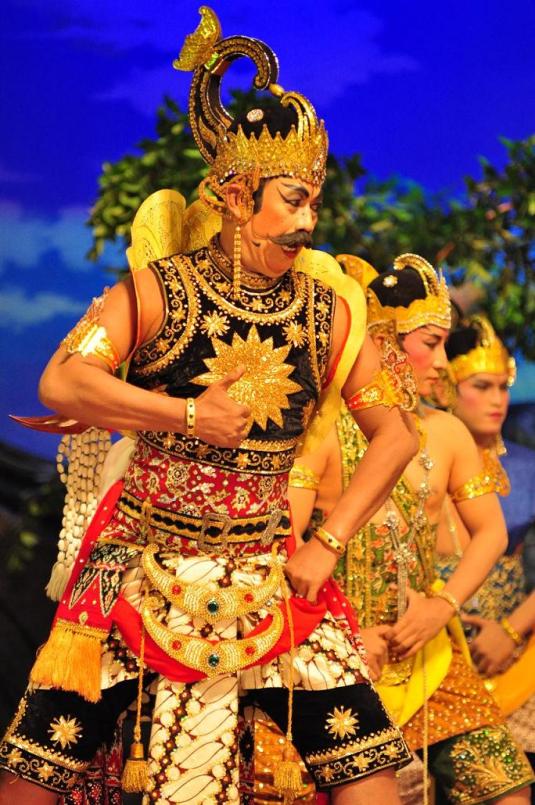
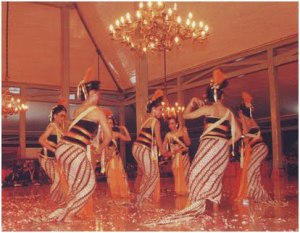
At one time, Javanese classical dance was exclusively performed at court for the royal families. Nowadays, most children from Solo have had classical dance lessons at one time or another. Almost all of the dancers wear elegant batik costumes and often use exotic headpieces. Some of the most famous dances are the Bedhoyo Ketawang, the Gambyong, and the Srimpi. The Bedhoyo Ketawang performed by nine girls only once a year on the anniversary of the reigning king`s ascension to the throne, is a sacred court dance of the Solo Palace known since in the early 17 th century.
The Srimpi Dance

The Gambyong is a lively dance for welcoming guests while the Srimpi is a slow, controlled, elegant dance of graceful movement, especially of the arms, hands, fingers, and head, inspired by the quiet flow of peaceful water. The magical subtlety of these three regal dances, and many more, which are now open to the public, can be witnessed at palace performances, set in the original, mystical atmosphere.


WAYANG PERFORMANCES


Wayang Orang
       Wayang, a term denoting any of several types of plays or performances which are specifically Javanese but derived from the classical Hindu epics of the Mahabarata and Ramayana, contains the true essence of Javanese philosophy and metaphysics. Many people in Java are named after wayang characters in the hope that they will attain to the greatness of the legendary character whose name has been bestowed upon them; customs and traditions, attitudes and body language, ideals and the moral code are all influenced by the complex symbolic representation of life pictured in the wayang tales and myths. Wayang orang, the live "human" wayang performance, is sung and danced with dialogues and scenes of comic relief interspersed. The actors, wearing superb batik costumes, elaborate jewelry, and intricate headpieces, relate episodes of  myth and magic accompanied by a full gamelan orchestra. A complete performance, held every night at the Sriwedari Park in Solo lasts for four hours. For the most popular wayang performance, wayang kulit or the shadow puppet play, a puppeteer called the dalang sits cross-legged in front of a screen from 9 o`clock in the evening until dawn of the following day. A lamp shining above the dalang`s head not only lights up his elaborate manipulation of the flat, leather puppets, but also created the shadows of the puppets that can be watched from the other side of the screen. Actually, the shadow side of the screen faces the audience with the dalang working back-stage. The skill, dexterity, stamina, and artistry of the dalang is beyond belief : sitting cross-legged for eight hours, improvising the words of each character, male, female, young and old, in speech and in song, altering his voice to suite the different characters, moving the puppets, sometimes several at one time, with agility and precision; and directing the gamelan orchestra in time to the action and the story, the dalang not only relates a story, but creates a live world of mystical philosophy, of noble and evil characters, of artistic drama so real that the puppets seem to be alive.

Wayang Kulit
 LEATHER PUPPETS

The delicate artistry put into the crafting of the colourful leather puppets is also remarkable. Made from a rather thick, parchment-like piece of leather which is chiselled and then punched out so that light can shine through, producing the exquisitely delicate shadows on the screen, each character is carefully gilded and painted and then attached to ahorn stick which the dalang uses to hold and move the puppets. All shadow play puppets are individual works of art, produced one by one by leather works artists who are also skilled painters.

 BATIK

      One of the most striking "sights" in Central Java, so unlike the extraordinary palaces, temples, and other ancient sites of classical interest, can be enjoyed daily by merely walking down the streets of Solo. Apart from the warmth and friend liness of the Solonese, an unforgetable color can be observed the bright colors of the batiks worn by a significant percentage of the population. Batik cloth and shirts are now used in the formal national dress of Indonesia. The batik processing is an intricate, classical art form that has had along and important role in Javanese tradition. There are scores of different motifs, each of which has special meaning, often symbolic, and are only used for certain formal occasions, such as wedding ceremonies, funerals or anniversaries. Batik is a dye-resistant process. Patterns are drawn on cloth with molten wax. When the wax hardens, it is dye-resistant, so, the unwaxed parts of the cloth can be dyed, while the waxed  part is not affected. This process is repeated over and over again, depending on the pattern and the number of colors desired, by boiling the hardened wax off the cloth and applying a new wax pattern.
There are three basic ways to apply the wax : by hand, using a special copper tool for drawing; with a copper stamp; or a combination of hand and stamp. All three methods are fascinating art forms. Many hand drawn batiks, called batik tulis, take 2-3 months to make : that is, one piece of cloth 2 1/4 by 1 1/4 meters takes 60-90 days to create. For the production of the stamp batiks, callec cap, first a copper stamp must be made. This stamp is then used for the waxing process. The stamp is made by hand and so is the waxing process. The stamp which can be used for more than one piece of cloth, is more economical and less time consuming to use, but the outcome; is just as beautiful. It is often very difficult to distinguish between a hand drawn, a hand stamped, and a combination batik. The stamp them selves are oftem displayed as works of art. Batik production is one of Solo`s main industries and arts. Batik are produced for all purposes : for informal wear (colorful shirts, blouses, dresses, skirts, and even hats or shorts); for formal wear (the traditional kain, a piece of cloth wrapped around the body like skirt); and for home use (brilliant table cloths, table sets, napkins; as wall-hangings, ranging from traditional scenes to modern, abstract designs; and sheets, pillow cases and numerous accessories, from handbags to fans to slippers).

KERIS

      The Keris, or dagger, is another magical, mysterious product of ancient Java. As an integral part of Javanese ceremony and ritual, it is worn by men for important occasions and for traditional rites. The artistry of forging the Javenese dagger dates back to ancient times, even before the Majapahit Kingdom (13 th century). The blade is made of a mixture of steel and meteorite, while the handle is usually made of teak or ather rare and valuable woods. Often gems, usually diamonds, rubies or sappphires, are inlaid near the base of the hilt. The sheathes are also works of art, frequently made of gold and inlaid with gems. Tradition has it that the artisans of the kerises, called empuh, were able to shape the blades with their bare hands, a power gained from spiritual and ascetic exercises. The kerises, too, are said to be magical : kerises are known to suddenly disappear into the blue;fly through the air; make noises when disturbed; appear in a dream only to be found a few days later; stand on the blade tip; or cause prosperity or disaster according to their suitability to their owners. The most precious kerises can be seen in museums throughout the country or on display in private collections.


SOLO, Places of Interest ( Part 1 )

THE KASUNANAN PALACE


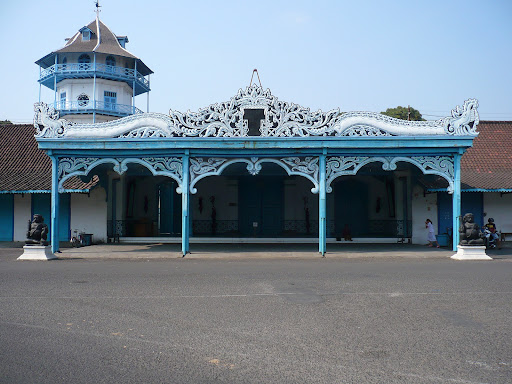
         The Kasunanan Palace, also called the kraton Surakarta Hadiningrat, was built in 1745 by King Pakubuwono II. It is decorated with marble statues, gilded columns, and ancient relics. Inside the Palace or Kraton, can be found a fascinating art gallery and museum with exhibitions of royal heirlooms, palace-carriages and coaches, ancient weapons and daggers (kerises), and precious antiques. The courtyard of the kraton is dominated by an impressive tower named Panggung Songgobuwono, The Tower of the Universe. According to tradition, this tower was the mysterious meeting place of the Kings and Nyai Roro Kidul, the Goddes of the Southern Sea. Nowhere in Indonesia can there be found a more dignified and peaceful monument to the traditions, art, and culture of the classical Javanese Kingdoms.

THE PURA MANGKUNEGARAN


         The Mangkunegaran Palace is another superb repository of classical Javanese art and culture. Prince Mangkunegoro II began its construction at the end of the 18th century. The Palace occupies an area of 10.000 square meters. Constructed in the Joglo style of traditional Javanese architecture, the royal estate contains numerious, priceless theasures, mostly from the Majapahit (1293-1478) and Mataram (1586-1755) empire eras: an exquisite collection of classical dance masks, wayang orang (dance drama) costumes, leather and wooden
wayang puppets, religiousicons, jewelry, and uncountable other antiques and heirlooms. There is also an internationally famous gamelan (the instruments of the Javanese classical orchestra) brought to Solo from Demak, the former centre of the Demak Kingdom (1500-1568), in 1778, which traditionally was played only on special occasions for ceremonis and affairs of state, but which now can be heard every Wednesday during dance rehearsals. Within this magnificent palace is the Reksobudoyo Library where rare volumes of literature, religion and philosopy written in Javanese characters are preserved.
SRIWEDARI PARK

          Inspired by a story about a mythical park in heaven, King Pakubuwono X originally created the Sriwedari Park as a resort and recreational center for the Royal family. Locally referred to as Kebun Rojo, or the "King`s Garden", the park now offers a number of amusement facilities, for children and adults, along with several cinemas, numerous small restaurants offering local cuisine, a museum, and many souvenir stands. But, the most populer attraction at Sriwedari is the nightly program of Wayang Orang, the live Wayang dance dramas, performed by the top Wayang dancers and singers in Indonesia. There is also a month-long evening bazaar held in the park prior to the celebration of Idul Fitri, the Muslim holiday at the end of the fasting month.

THE RADYAPUSTAKA MUSEUM


          Built in 1890, this museum houses a diverse assortment of centuries-old Mataram artifacts, exquisitely-crafted hand made Kerises, a remarkable collection of Wayang puppets, and a Library of Dutch and Javanese books. It is the oldest and Largest museum in Central Java.

THE KLEWER TEXTILE MARKET


         Next to the northern square of the Sultan`s Palace is Java`s largest Batik center, a shopper`s delight for all kinds of fabrics, ranging from the traditional Lurik (a handwoven, striped cotton cloth) to batik, to modern fabrics. Priced are not fixed and bargaining is expected.

THE TAWANGMANGU RESORT


         At an altitude of 1200 meters on the western slope of Mount Lawu is the holiday resort of Tawangmangu, famed for its fresh, cool mountain air, and breath-taking panorama of the verdant ricefield terraces and sugarcane plantations. It is extremly refreshing ti hike through the towering pine trees to the crystal clear waterfall, Grojogan Sewu, or to take a horseback ride through the rain forest hills inhabited by wild monkeys.


SUKUH TEMPLE


      Built during the twilight years of the glorious Majapahit Kingdom, this strange, mysterious temple is utterly different in mood and in architecture from the temple elsewhere in Java. Located on the western slope of  Mount Lawu, 910 meters above sea level, the main building is reminiscent of the Mayan.


SOLO, THE Cradle of Javanese Culture

Javanese Classical Dance
As the cradle of Javanese culture, Solo or Surakarta is the most interesting tourist destinations in Indonesia. It is situated on a fertile plain amidst volcanic mountains, along side the longest river in Java, Bengawan Solo. Solo is generously endorsed with varied geographical features and in numerable scenic spots. The numbers of the City`s two royal courts, the oldest direct descendants of the Mataram empire (1586-1755), have made it their duty to preserve and foster knowledge of the classical Javanese culture. The classical performance arts like Gamelan (percussion) orchestral music, dance and Wayang (leather puppet and "live" puppet) plays are remain an integral part of daily life. Solo is also the centre of the production of Javanese batik, popular all over the world. The ancient process of making this exquisite cloth, once used exclusively by Javanese nobility, is one of the most highly prized arts. Batik craft is a traditional art from which has been practiced for centuries in the production of material for traditional dress. Batik can be drawn by hand or made by using special stamps. The traditional costume is called Kain Kebaya. But nowadays batik is also used for modern clothing, table cloth, napkins, bed covers, modern and traditional wall hangings and curtain. The batik process is also used in modern painting.

Bengawan Solo River

In 1745, King Pakubuwono II chose the peaceful village of Solo as a favorable site to build his luxuriant new palace, the Surakarta Hadiningrat Palace. The king had been forced to flee his old palace at Kartasura,15 kilometers east of Solo, due to a rebellion. After regaining his throne, he established the new court city on the lush eastern bank of the Bengawan Solo River, the longest river in java. This new haven soon became the capital of the Javanese kingdom. Two centuries later, in 1946, shortly after the establishment of Indonesia as Republic, Surakarta relinquished its status as a kingdom to become a municipality. The two names, Solo and Surakarta, are interchangeable and both reflect the historical beginnings of this rich cultural centre. The Municipality of Solo, officially designated on June 16, 1946 is located in the Province of Central Java, lying on a verdant tropical plain, ringed by the Merapi, Merbabu, and Lawu Volcanoes. Solo has an area of 44.37 square kilometers and is 96 meters above sea level. The average temperature is 28 degrees Celcius during the day and 23 degrees Celcius at night.
Mount Merapi
The population of Solo is slightly over 500.000 people, a vast majority being Javanese, with the major minority ethnic groups being Chinese, Arabs, Indians and Pakistans. The Solonese believe in the existence of one God and worship Him according to their respective faiths, with amazing tolerance towards people of other religions. Muslims by far outnumber members of other denominations, but live in harmony with Catholics, Protestants, Hindus, Buddhist, and Confucians. Beautiful Mosques, churches, and temples reflect a centuries - old spiritual heritage. The growing interest in spiritual and mystical knowledge has brought thousands of people from all over the world to Solo to study variuos types of meditation.

Monday, 2 April 2012

HIKMAH QURBAN

Sebuah Kisah Anak Manusia Nan Elok ( Disarikan dari buku Ibrahim Sang Sahabat Tuhan; Karya Abu Yahya Jerald F. Dirk, PT. Serambi Ilmu Semesta, Jakarta 2004 )

Syahdan, ribuan tahun yang lampau. Seorang kakek tua menerima sebuah mimpi yang aneh dan menyesakkan hati, yakni perintah untuk menyembelih putranya sendiri, sebagai qurban persembahan kepada Allah. Kakek tua itu kemudian kita kenal sebagai Nabi Ibrahim a.s. dan anak yang disuruh untuk dikorbankan tersebut adalah Nabi Ismail a.s. yang kala itu baru berusia sekitar 13 tahun. Setelah terbangun karena mimpi tersebut, kakek Ibrahim tentu merasa masygul dan gelisah. Betapa tidak? Allah menghadirkan putra bagi Nabi Ibrahim setelah berusia hampir 90an tahun. Kini, setelah sang anak memasuki usia remaja, dimana muncul sebuah pengharapan besar agar menjadi partner dakwah dan melanjutkan misi kenabian, tiba-tiba diperintahkan begitu saja untuk disembelih. Apa nggak salah tuh mimpi? Masa` sih tu mimpi wahyu dari Allah? Mungkin begitu pertanyaan awal yang berkecamuk dikepala kakek Ibrahim. Namun, setelah mimpi serupa hadir untuk yang ketiga kalinya, barulah "sang kekasih Allah" ini yakin, bahwa mimpi tersebut datang dari Dzat yang dicintainya. Pada keesokan hari, segera dipanggil putra kesayangannya. Ibrahim bukanlah tipikal ayah yang sangar dan semena-mena terhadap anak. Sebagai seorang pimpinan yang bijak, Ibrahim berusaha mengukur kesiapan diri orang yang dipimpinnya, dengan cara memaparkan apa yang dilihatnya dan menanyakan pendapat serta jawaban dari Ismail. " Maka, Kami beri dia kabar gembira dengan seorang anak yang sangat sabar. Maka, tatkala anak itu sampai (pada umur sanggup) berusaha bersama-sama Ibrahim, Ibrahim berkata : 'Hai anakku, sesungguhnya aku melihat dalam mimpi bahwa aku menyembelihmu. Maka, fikirkanlah apa pendapatmu!' Ia menjawab : 'Hai bapakku, kerjakanlah apa yang diperintahkan kepadamu; jika Allah mengizinkan, kamu akan mendapatiku termasuk orang-orang yang sabar." (QS.Shoffat 37;101-102). Begitulah jawaban Ismail. Sebuah hasil pendidikan pemahaman ma`rifatullah yang sempurna tentunya. Mereka berdua segera bergegas menjalankan perintah Allah Swt tersebut.


Bukan Iblis la`natullah `alihi namanya juka sampai tinggal diam menyaksikan hamba yang demikian patuh kepada perintah Rabb-nya. Dalam perjalanan menuju tempat penyembelihan, Iblis kemudian menghampiri Nabi Ibrahim. Keduanya terlibat adu argumentasi mengenai validitas kebenaran mimpi tersebut. Iblis mencoba meyakinkan bahwa mimpi tersebut bukan dari Allah. Namun, Ibrahim membantah, sebab bukan kali ini saja beliau berinteraksi dengan Allah. Bisa jadi Nabi Ibrahim sangat hafal dengan kehendak Allah yang seringkali tidak masuk akal dan bertentangan dengan nafsu manusiawi. Perdebatan akhirnya usai, dengan keyakinan Nabi Ibrahim yang keluar sebagai pemenangnya. Skor tercetak satu kosong untuk kekalahan Iblis. Namun Iblis tidak menyerah begitu saja karena Iblis adalah makhuq yang istiqomah dengan tugasnya. Gagal dengan sang ayah, giliran sang anak yang jadi sasaran. Segera ditebarkan ide-ide yang menggelitik akal, agar Ismail memikirkan kembali dan merevisi jawabannya. Namun, ketika hati manusia telah terisi full tank dengan keagungan asma Allah, maka tak perlu lagi mempertimbangkan sebuah niat yang telah bulat dan pantang mencabut kembali semboyan sami`na wa atho`na yang telah terucap. Dua kosong untuk kekalahan Iblis, yang mungkin segera pergi dengan garuk-garuk kepala tak habis pikir, kenapa "abege" Ismail sudah bisa sedemikian hanif dalam menjalankan niat ya..? Tunggu dulu....cerita belum usai, masih ada satu tokoh lagi yang sering terabaikan begitu saja dalam kisah-kisah tentang qurban; kita selama ini telah melupakan teladan dari Ibu Hajar!. Sebagai seorang istri, perintah Allah tersebut tentu menimbulkan gejolak batin yang ruwet. Sebagaimana kisah seluruh anak manusia, Iblis la`natullah `alihi selalu kreatif dalam memanfaatkan segala celah-celah yang ada di hati. Diperkirakan, sebelum Nabi Ibrahin dan Nabi Ismail pergi jauh menuju tempat penyembelihan, Iblis berusaha menyelinap dibalik haru biru perasaan seorang ibu ini, dan memprovokasi Ibu Hajar agar segera berlari mengejar, dan melancarkan pemberontakan aqidah kepada suaminya. Namun, semenjak dihadiahkan oleh Fir`aun sebagai budak Ibu Saroh (Istri pertama Nabi Ibrahim), hati Ibu Hajar telah lama terlatih oleh tempaan pemahaman tauhid. Ibu Hajar juga pernah ditinggalkan sendirian bersama bayi Ismail dipadang Bakkah (sekarang Makkah), hanya berbekal keyakinan akan perlindungan dari Allah Ta`ala, 13 tahun sebelum mimpi menakutkan ini datang. Berikut petikan drama yang menggetarkan jiwa orang-orang yang ingin mendekat kembali kepada Allah, dan berusaha mengikuti jejak "kekasih-kekasih" Allah:


"................Ibrahim akhirnya menaruh Siti Hajar dan Ismail dibawah pohon, dan ia kemudian memberikan tempat air dan tas kulit berisi kurma pada istrinya. Lalu, Ibrahin tampaknya berbalik secara diam-diam dan mulai berjalan meninggalkan mereka. Ketika Ibrahim semakin jauh berjalan, Siti Hajar tampaknya menjadi cemas mengenai apa yang akan terjadi. Ia kemudian meninggalkan Ismail sebentar dibawah naungan pohon, berdiri, berlari menyusul Ibrahim, dan memanggil namanya (AL-Bukhari 4:583-584).Ibrahim tidak menghentikan perjalanannya, tidak menengok, dan tidak pula mengatakan sepatah katapun. Mungkin kepedihannya terlalu dalam sehingga ia tidak bisa berbicara saat itu. Tapi, Siti Hajar tetap mengejarnya sambil berteriak, "Wahai Ibrahim, engkau akan pergi kemana? Apakah kamu akan meninggalkan kami dilembah ini, dia tidak ada seorangpun teman atau apapun juga?" Ibrahim tak bergeming dan tetap berjalan meninggalkan Mekkah tanpa menengok atau bicara. Karena tidak mendapatkan tanggapan, Siti Hajar meninggikan suaranya untuk bertanya kepada Ibrahim, "Apakah Allah memerintahkanmu berbuat demikian?" Setelah mendengar pertanyaan itu, Ibrahim berhenti dan mengiyakan pertanyaan itu. Allah telah memerintahkan Ibrahim untuk meninggalkan Siti Hajar dan Ismail dilembah ini (Al-Bukhari 4;583). Setelah mmendapatkan jawaban itu, Siti Hajar hanya punya satu pertanyaan, "Wahai Ibrahim, kepada siapa engkau meninggalkan kami?" "Aku menitipkanmu pada perlindungan Allah." Pada saat itu, terlepas dari berbagai pertanyaan tak terjawab yang memenuhi benaknya, keimanan dan kepatuhan Siti Hajar yang teguh kepada Allah langsung memegang kendali. Ucapan selamat tinggalnya kepada suaminya itu singkat, meski mengandung banyak makna mengenai sifat dan komitmen spiritualnya kepada Allah, "Aku ridho bersama Allah" ( Al-Bukhari 4:584).
Sehingga wajar jika tipuan Iblis yang menyatakan bahwa mimpi itu bukan dari Allah, serta mengajak Ibu Hajar memprotes dan menuntut suaminya, akhirnya "gatot" alias gagal total. Tiga kosong skor kekalahan untuk Iblis. Kembali kepada Ibrahim dan Ismail, setelah sampai di tempat tujuan dan segala persiapan beres, Nabi Ismail segera dibaringkan. Hingga pisau tajam menempel di leher Ismail, keyakinan ayah dan anak ini tak sedikitpun goyah karena terganggu oleh detak jantung masing-masing, yang tentunya berdegup jauh diatas normal. Keimanan mereka kepada Allah demikian teguh sempurna. Ketika pisau akan digerakkan untuk memotong leher Ismail, kemudian terdengarlah suara: "Dan Kami panggillah dia;'Hai Ibrahim, sesungguhnya kamu telah membenarkan mimpi itu, sesungguhnya demikianlah Kami memberi balasan kepada orang-orang yang berbuat baik.Sesungguhnya ini benar-benar suatu ujian yang nyata. Dan Kami tebus anak itu dengan seekor sembelihan yang besar. Kami abadikan untuk Ibrahim itu (pujian yang baik) dikalangan orang-orang yang datang kemudian. Yaitu 'Kesejahteraan dilimpahkan atas Ibrahim'. Demikianlah, Kami memberi balasan kepada orang-orang yang berbuat baik. Sesungguhnya ia termasuk hamba-hamba Kami yang beriman." (QS.37;104-111).